How we choose what to roast
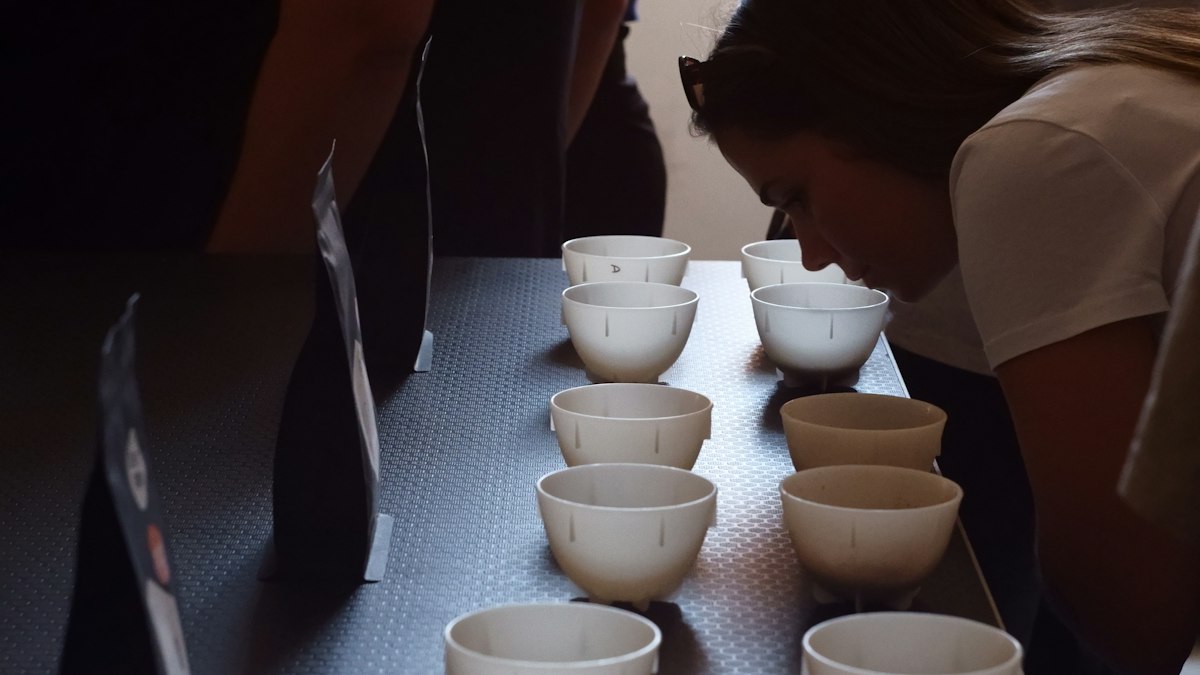
Twice a year, importers send us sample boxes: small bags of green coffee from the new harvest, usually 20 to 40 at a time. Choosing which ones to buy is called cupping, and it's the most important thing we do.
We roast each sample on a small drum roaster to the same light profile, let it rest 24 hours, then grind and brew all of them side by side in identical bowls. We taste blind, with the names covered, scoring aroma, acidity, sweetness, body, and finish. Then we uncover the names and argue.
Price matters, but not first. We score first and look at price second, and we reject anything that scores well but comes with a farm-gate price we're not comfortable with. The importers we work with publish those prices, which makes this easier.
This season's Gedeb lot scored highest of the Ethiopian naturals we tasted, by a clear margin. The farm-gate price was also among the highest, which is usually how it goes. We bought everything the importer had left: 14 bags of 60 kilos. When it's gone, it's gone.